
VPAT ACR for Section 508 and WCAG- What you must know
A Voluntary Product Accessibility Template (VPAT®) is a standardized template used to document a product’s conformance with accessibility standards. Once completed, this document becomes an Accessibility Conformance Report (ACR), a key resource for public procurement and compliance evaluation. According to the Information Technology Industry Council (2023), the VPAT is designed to support accessibility compliance for standards like Section 508, WCAG, and EN 301 549 (itic.org).
What is a VPAT and Why does it matter?
According to the U.S. General Services Administration (2023), agencies must evaluate digital tools based on accessibility during procurement (section508.gov). A properly completed ACR helps buyers understand how accessible a product is. A correctly filled VPAT ensures that federal agencies meet their obligations under Section 508 of the Rehabilitation Act.
Filling out a VPAT the right way can make or break your chances of working with federal agencies. If you skip it or fill it inaccurately, your product may be disqualified from contracts. But if you connect with ADACP for an expert-led audit and a professionally written ACR, it brings multiple benefits such as clarity, compliance and buyer confidence. An expert ACR speeds up procurement approvals and shows that you are serious about digital accessibility from the start.
The VPAT has four editions:
- VPAT 2.5 508: Required for US Section 508
- WCAG Edition: Used when only WCAG conformance is applicable
- EU Edition: Goes with EN 301 549 for European accessibility
- INT Edition: Covers all three standards for international use
Q: How do I know which VPAT edition to use?
A: Use 508 Edition for U.S. government contracts, EU for European clients, and WCAG Edition for web-only products.
What are Section 508, WCAG, and EN 301 549
Section 508 is a U.S. federal law requiring that information and communication technology (ICT) developed, procured, maintained or used by the federal government is accessible to people with disabilities (U.S. Access Board, 2017).
Web Content Accessibility Guidelines (WCAG), developed by the W3C, provide global standards for making web content more accessible to people with disabilities. Section 508 now aligns with WCAG 2.0 Level AA (W3C, 2018).
EN 301 549 is the European standard for accessibility requirements suitable for public procurement of ICT products and services in Europe. This standard also maps closely to WCAG and is recognized under the European Union’s accessibility directive (European Commission, 2021).
Why a VPAT ACR is Crucial for Government and Enterprise Buyers
Agencies need documentation to verify accessibility. ACRs provide that transparency. According to the GSA Accessibility Requirements Tool (2023), ACRs are one of the first documents reviewed during procurement evaluations.
An ACR includes:
- Product name and version
- Evaluation methods used
- A table with each requirement and level of support (e.g., “Supports,” “Partially Supports”)
- Explanations and notes for each criterion
Q: Why do agencies prioritize ACRs during procurement?
A: Because an ACR offers an upfront view of how accessible your product is. It saves time, reduces risk and helps procurement officers quickly determine if your product meets legal accessibility standards. Without it, your bid may not even be considered.
6 steps to complete a VPAT Accessibility Conformance Report
The U.S. General Services Administration (2023) outlines the following steps:
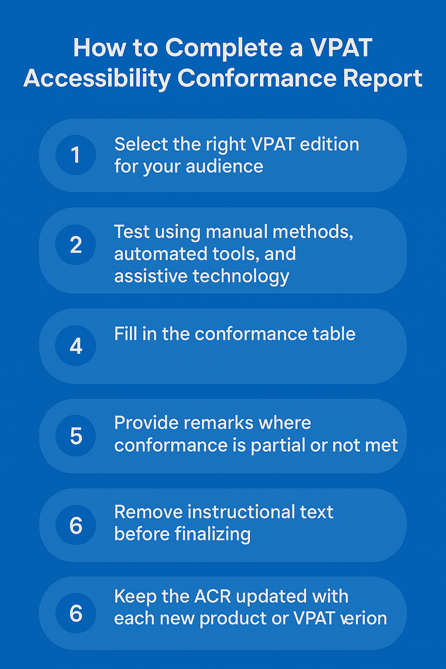
Image 1: Step wise guide to completing a VPAT Accessibility Conformance Report
Source:https://www.adacompliancepros.com/
- Select the right VPAT edition based on your audience ( 508 for U.S. federal buyers).
- Test your product using a combination of manual testing, automated tools, and assistive technology.
- Fill in the conformance table for each accessibility requirement.
- Provide remarks for each item, where conformance is partial or not met.
- Remove instructional text before finalizing.
- Keep the ACR updated with each new version of the product.
Q: What is the difference between a VPAT and an ACR?
A: A VPAT is the blank template. Once filled out and finalized, it becomes an ACR. Schedule a free consultation to learn more about ACR.
Legal & Policy Background
Section 508 was updated by the U.S. Access Board in 2017 to go with WCAG 2.0 (U.S. Access Board, 2017). Additionally, the Office of Management and Budget issued Memorandum M-24-08 in 2023 to practice digital accessibility at federal agencies (Office of Management and Budget, 2023).
Federal Acquisition Regulation (FAR) clauses also require to consider accessibility into all ICT acquisitions. Hence, ACR is not only a best practice but a legal necessity (GSA, 2023).
Best Practices for ACR Completion
Make your Accessibility Conformance Report stand out and meet federal expectations. Follow the below listed tips to ensure accuracy, transparency and compliance throughout the documentation process. These are the same practices reviewed by federal buyers and accessibility evaluators when considering vendors.
Legal & Policy Background
Section 508 was updated by the U.S. Access Board in 2017 to go with WCAG 2.0 (U.S. Access Board, 2017). Additionally, the Office of Management and Budget issued Memorandum M-24-08 in 2023 to practice digital accessibility at federal agencies (Office of Management and Budget, 2023).
Federal Acquisition Regulation (FAR) clauses also require to consider accessibility into all ICT acquisitions. Hence, ACR is not only a best practice but a legal necessity (GSA, 2023).
Best Practices for ACR Completion
Make your Accessibility Conformance Report stand out and meet federal expectations. Follow the below listed tips to ensure accuracy, transparency and compliance throughout the documentation process. These are the same practices reviewed by federal buyers and accessibility evaluators when considering vendors.
- Be transparent: Partial support is acceptable if properly documented.
- Use objective testing methods: Implement accepted measures for manual and automated testing.
- Reference applicable standards clearly: Make sure users know what you conform -508, WCAG 2.1, or EN 301 549.
- Keep your ACR updated: Version changes, new features, or updated standards require timely updates.
Q: What happens if I don’t follow these best practices for ACR completion?
A: Incomplete ACRs may delay procurement, raise red flags during compliance checks or cause disqualification. Following best practices shows that you are prepared for federal scrutiny.
Common Mistakes to Avoid
Many organizations unintentionally reduce the credibility of their Accessibility Conformance Report by repeating some slipups. Table 1 shows what to watch out for and why it matters:
Table1: Top ACR Mistakes and Why They Hurt Your Accessibility Compliance
Q: Do I need to submit an ACR for each version of my product?
A: Yes. Any changes to features or accessibility impact should trigger a new ACR.
Sample Public ACR
Agencies like Login.gov publish public-facing ACRs to maintain transparency. Their report includes a completed VPAT 2.5 508 Edition with detailed conformance data.
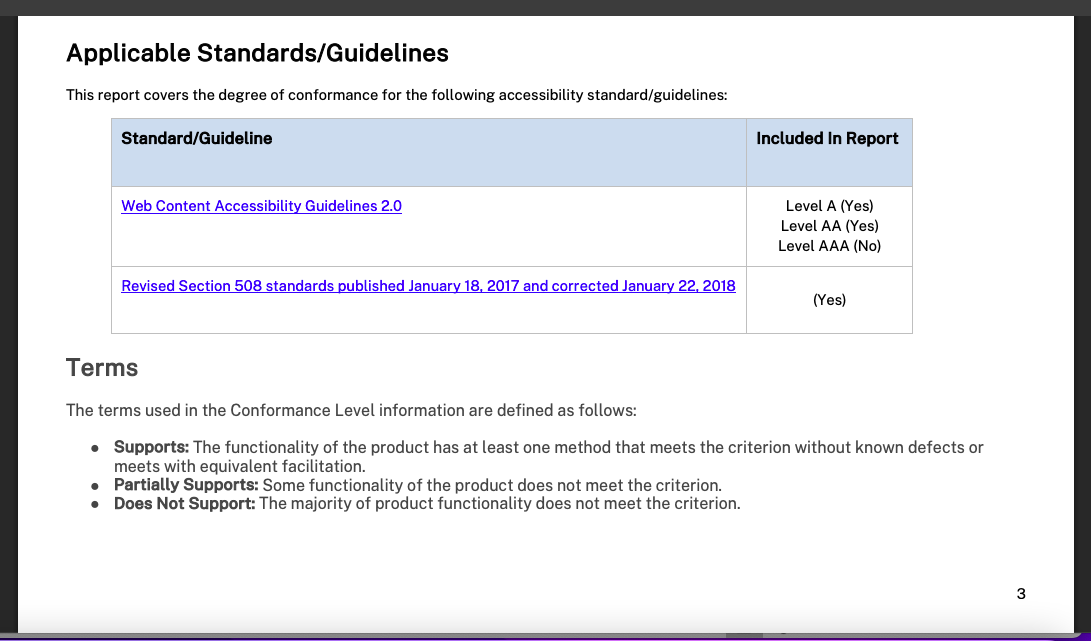
Image2: Snapshot of Page 3 of VPAT® Version 2.5Rev
Source: Login.gov VPAT 2.5 Rev 508 ACR (PDF)
If you want to publish your own ACR on your website then ADACP can help. We offer end-to-end accessibility audits, manual testing and remediation support. Once your product meets compliance standards, we will provide a professionally written, up-to-date ACR you can confidently publish.
Conclusion
A properly written VPAT ACR not only demonstrates compliance but also builds trust with federal buyers and global partners. By following official guidance, using accurate citations, and avoiding third-party competitor references, your report becomes a reliable compliance document that meets regulatory expectations.
Looking for VPAT accessibility specialists to prepare or review your ACR?
ADACP offers expert audits, manual testing, and accurate ACR documentation tailored to Section 508, WCAG, and EN 301 549. Reach out to our team today to get started with a custom accessibility audit and publish a VPAT your buyers can trust.
Schedule a free consultation for your VPAT ACR audit with ADACP.
References
- Information Technology Industry Council. (2023). VPAT® Template and Guidance. ITI, VPAT template and guidance
- U.S. General Services Administration. (2023). Section 508 Laws and Policies. Section508.gov, Laws and policies
- U.S. General Services Administration. (2023). How to Create an ACR. Section508.gov, How to create an ACR with a VPAT
- U.S. Access Board. (2017). Revised 508 Standards. U.S. Access Board, Revised 508 ICT standards
- Office of Management and Budget. (2023). M-24-08 Memorandum. OMB Memorandum M-24-08 (PDF)
- World Wide Web Consortium (W3C). (2018). Web Content Accessibility Guidelines (WCAG) 2.0. W3C, WCAG 2.0 specification
- ETSI & European Standard isation Bodies. (2021). EN 301 549 v3.2.1: Accessibility requirements for ICT products and services. Harmonised under EU Web Accessibility Directive AS OF 18 Aug 2021 European Commission, Web Accessibility Directive standards and harmonisation
- European Commission. (2021). Web Accessibility Directive (EU) 2016/2102 Harmonisation Update. European Commission, latest changes to the accessibility standard
- Login.gov. (2025). Accessibility Conformance Report (ACR). Login.gov VPAT 2.5 Rev 508 ACR (PDF)